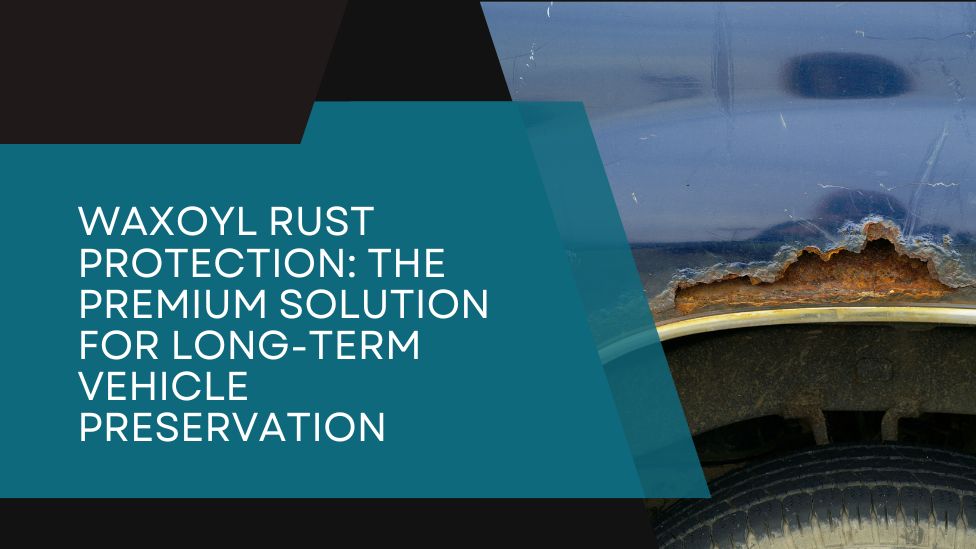
Spend a few winters in Michigan and you learn what road salt does to a vehicle. Rocker panels start to bubble. Brake lines go crusty. The frame looks a little worse every spring. Rust protection like WaxOyl is how you slow that down, but it isn’t the right buy for every vehicle, and it isn’t a one-time fix.
Here’s what it does, where it falls short, and how to decide whether it’s worth it for yours. (If you already know you want it, our WaxOyl undercoating and rust proofing page covers how we apply it.)
Why Michigan is so hard on metal
Rust needs bare metal, water and oxygen. Salt doesn’t cause rust by itself, but salty water speeds the process up a great deal, and Michigan roads get plenty of it between rock salt and the liquid brine sprayed ahead of storms.
Brine is the sneaky one. Because it’s liquid, it creeps into seams, pinch welds and the backs of panels where a hose never reaches. Slush packs into the wheel wells and sits there. And the worst damage doesn’t happen on the coldest days. Corrosion moves faster when things are wet and just above freezing, so a slushy, 35-degree week in February does more harm than a dry, frozen one.
Most rust starts where you can’t see it: inside the rocker panels, along the bottom seams of the doors, behind the bumpers, around fasteners, and anywhere a stone chip has opened the paint down to bare metal.
What WaxOyl is
WaxOyl is a professional rust protection treatment. It’s sprayed onto the underside of the vehicle and into the hollow sections of the body, and it leaves a protective film over the metal that keeps water and salt from sitting directly on it.
People often lump it in with undercoating, and that’s the word most of us search for. It isn’t the same thing as the thick rubberized undercoating some people remember from years ago, though. That older stuff could crack as it aged and hold water against the metal, which is the opposite of what you want. The idea here is to cover the metal and get into the seams, not to build a shell over them.
Where rust protection does the most good
A thorough job covers more than what you can see when you look under the vehicle. The areas that matter most:
- Frame rails and crossmembers
- Floor pans and the underside of the body
- Rocker panels, inside as well as out
- Door bottoms and the tailgate or liftgate seams
- Wheel wells
- Suspension mounts and brackets where water collects
When you compare shops, ask which of these get treated. Spraying only what’s visible from underneath leaves the hidden cavities, and that’s where a lot of rust actually begins.
What WaxOyl won’t do
This is the part worth hearing before you pay for anything.
It won’t reverse rust
Light surface rust can be cleaned up and treated over, and slowing it down is worthwhile. But holes, flaking metal or a frame that’s soft in places are a job for a body shop or a welder first. Spraying over heavy rust only hides it for a while.
It isn’t a one-time treatment
Road spray, gravel and pressure washing wear the film down, especially in the wheel wells. In Michigan’s salt, re-application is usually recommended every year or so, with extra attention to the spots that took the most abuse. If you’re not going to come back for that, you won’t get the full value.
It’s messy
Rust protection of this kind goes on wet. The underside stays coated, which is the point, but it won’t look factory clean under there afterwards. A few drips or a bit of smell in the first day or so isn’t unusual. If you want a spotless underbody for car shows, this probably isn’t the treatment for that vehicle.
It doesn’t replace washing
A rinse under the vehicle after a salty stretch still matters, treated or not. The treatment gives salt a much harder time reaching the metal. It doesn’t give you permission to drive around caked in salt until April.
So, is it worth it?
For the right vehicle, yes. It usually makes the most sense when:
- The vehicle is new or nearly new. This is the best time. The metal is clean, the factory seam sealer is intact, and nothing has started yet.
- You plan to keep it for many winters. A truck or SUV you expect to drive for a long time gets the most out of yearly treatment.
- It has surface rust but nothing structural. Once the loose rust is dealt with, treating it now can slow things down considerably.
It probably isn’t worth it when:
- You’re turning in a lease in a year or two.
- The rust is already structural, and the money is better spent on repairs or on the next vehicle.
- You know you won’t keep up with re-application.
Get the timing right
Fall is the best time, before the brine trucks start running. The underside has to be clean and fully dry for the treatment to cover well, and that’s far easier before slush season than in the middle of it. If winter has already started, it can still be done, but plan on the vehicle being washed and dried out first.
Spring is worth a look as well. Once the winter’s salt is washed off, it’s easy to see where the film wore thin and needs touching up.
Questions to ask any shop, including ours
- How is the underside cleaned and dried before treatment?
- Which areas and cavities get treated?
- How do you keep the product off the brakes, the exhaust and rubber parts?
- Are the drain holes left open so water can still get out?
- When should I come back for re-application?
A shop that does this properly will have straight answers to all five.
Protect the paint as well as the metal
Rust doesn’t only start underneath. A stone chip on the hood or the lower doors opens the paint, and salt does the rest. XPEL paint protection film on the front and lower panels keeps many of those chips from ever reaching the paint, and a FeynLab ceramic coating makes the salt haze on your paint much easier to rinse away.
Talk to us before salt season
We apply WaxOyl rust protection at our shop in Otisville, near Flint, Davison, Lapeer and Grand Blanc, and we work by appointment. Tell us the vehicle, its age and how long you plan to keep it, and we’ll give you an honest opinion on whether it’s worth doing. Call (810) 529-0019 or ask for a free quote.