By March, plenty of cars around Flint wear the same winter look: a gray crust of dried salt, a hood front speckled with new chips, and lower doors that feel like fine sandpaper. Give it a few winters and some of those chips start to rust. So it’s fair to ask whether paint protection film, which a lot of people still call clear bra, actually holds up to Michigan roads.
Short answer: against salt, sand and gravel on the panels it covers, yes, and it makes a real difference. Against hail, no. And it does nothing for the underside of the car. Here’s the longer version, so you know what you’re getting before you put XPEL clear bra on your vehicle.
How road salt really damages a car
Salt on healthy clear coat isn’t good for it if you leave it there for weeks, but on its own it works slowly. The real trouble starts where the paint is already broken. Gravel and sand thrown up by other vehicles chip through the paint to primer or bare metal. Salty slush gets into the chip, and rust starts right there. If you’ve ever spotted a tiny orange dot on the front edge of a hood, that’s usually how it began.
So on the painted body, protecting against salt mostly means preventing chips. Stop the chip and the salt has nothing to work on.
Where winter and gravel hit hardest
The damage isn’t spread evenly. On most vehicles it piles up in the same places:
- The front bumper, especially the lower half, which takes slush spray and gravel from the vehicle ahead
- The front edge of the hood, where highway chips show up first
- Headlights and mirror fronts, which face straight into the spray
- Lower doors and rocker panels, sandblasted by grit thrown off your own front tires
- The panels behind the rear wheels, on trucks and SUVs in particular
Highway driving loads up the front of the car. Gravel roads are different. On a dirt road outside Otisville or Lapeer, the stones come off your own tires and hit the sides and rear as much as the nose.
What the film does for you in winter
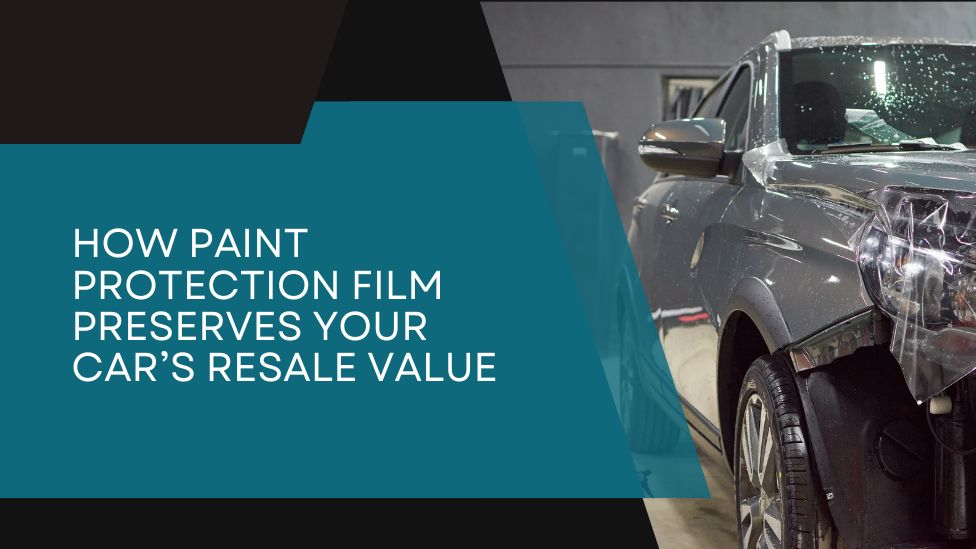
Paint protection film is a clear urethane layer over the paint. Sand and gravel hit the film, not the paint. Salty slush sits on the film. Grit that would slowly wear down the lower doors wears the film’s surface instead.
It also makes winter washing a bit easier, because salt and road grime let go of the smooth top coat without much scrubbing. And the self-healing top coat takes care of light swirls and fine scuffs from washing.
One Michigan catch: self-healing needs warmth. In January, those light marks may hang around until the car sits in a warm garage, gets a warm-water rinse or catches a sunny afternoon.
What it won’t do
This is the part people sometimes miss, so we’ll be blunt.
- It doesn’t protect the underside. The frame, brake lines, floor pans and the inside of the rockers and doors are where salt does its worst, and film never goes there. That calls for an underbody rust treatment. We offer Icon Rocklear for that job.
- It doesn’t fix chips you already have. Film over an old chip seals it, but the chip is still visible. Touch it up first.
- It has limits. A rock that comes off a truck at highway speed can still punch through the film or dent the panel.
- It only protects what it covers. A bumper kit does nothing for your doors.
What about hail?
Paint protection film is not hail protection. Hail damage is mostly dents in the metal, and a film a fraction of a millimeter thick can’t keep a panel from denting. If hail worries you, a garage is the real answer, and it’s worth checking what your insurance covers. If a car with film does get hail damage, tell the repair shop the film is there before any work starts.
Is it worth it on Michigan roads?
For a car that racks up highway miles or lives on gravel, we think so. Chips followed by salt is exactly the combination that ruins paint here, and film breaks that chain on the panels it covers.
For a weekend car that stays in the garage from November to April, the case is weaker. Film still guards against summer gravel, bugs and the odd stray stone, but the winter argument mostly goes away. Be honest about how the car is really driven, and spend accordingly.
Choosing coverage for salt and gravel
For most drivers, the front of the car is where film earns its keep. Our XPEL bumper kit covers the lowest, most sprayed panel up front and protects it from rock chips, road salt and dirt. The partial kit adds the headlights, the mirror fronts and the front third of the hood and fenders. The full front kit covers the whole hood and both fenders, which suits drivers who put a lot of highway miles on in winter.
If you live on a gravel road, or drive one every day, think about the sides as well. The XPEL full car package puts film over the entire car, so the lower doors, rockers and rear panels that front kits leave bare get covered too.
Winter care for a car with film
Film makes winter easier. It doesn’t make it maintenance-free. A few habits keep it in good shape through salt season:
- Rinse the salt off often, especially after a storm or a long highway run. Don’t let salty slush dry on the car for weeks.
- A touchless or self-serve wash beats letting it sit. Skip washes with spinning brushes, which can catch film edges and drag grit across the surface.
- Keep the pressure wand back. Hold it at a distance and at an angle, and never aim it straight at an edge of the film.
- Push snow, don’t scrape. Use a soft foam snow broom on the hood and never put an ice scraper on film-covered paint or headlights. A stiff brush full of grit is basically sandpaper.
- Wash the underside too. The film can’t help down there, so a good underbody rinse matters even more.
Talk to us before the next salt season
If you’d like film on your car before the salt trucks are back out, call (810) 529-0019 or request a free quote. We’re in Otisville, near Flint, open Monday to Friday from 8 AM to 5 PM by appointment, and we’ll give you a straight answer on which coverage your driving actually calls for.